Showing posts with label Technology. Show all posts

Saturday, September 1, 2018

The Growing Impact Of Artificial Intelligence In Everyday Lives

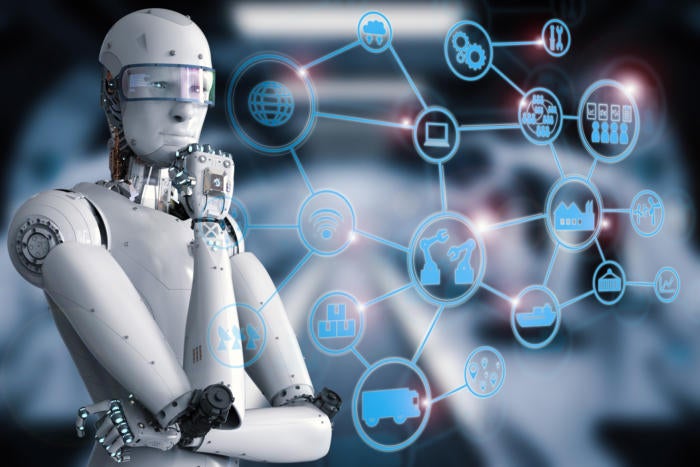
Only about a decade ago, most of the devices and gadgets that are now considered part of everyday goings-on were not around: from smartphones and fitness wearables to HD-resolution medical scanners and SSD cards. The advent of digital technology and global access to the internet have paved the way for the increased role of artificial intelligence in modern society.

Image source: nmims.edu


Indeed, AI devices are changing both the way people look at leisure and how businesses are conducted. AI has had a huge impact on various industries, from gaming and real estate to the automobile and healthcare industry. AI has given rise to various Internet of Things or IoT technologies, virtual and augmented reality property tours and improved patient data interpretation. Pretty soon, self-driving cars will be hitting the road.

The rise of AI technology aids in streamlining business operations, enhancing products offerings, and improving customer support. Industries are benefiting from AI’s ability to offer better analytical systems and interpret larger data sets. Efficient banking experience, speedier freight services, better GPS tracking to combat fraud—the benefits of AI are endless.

All in all, AI systems are making the words “efficiency” and “convenience” synonymous with modern living. Mundane work can be delegated to AI devices; people are freed up and can focus more on higher-level cognitive tasks to improve relationships, work output, and generally gain more time for, well, being human.

Image source: intel.com


Alex J. Ness has years of experience in the areas of private banking, wealth management, and investment. He is the Executive Chairman and Co-founder of health tech company Welwaze Medical, Inc. More on Alex’s work and interestshere.

Friday, August 24, 2018

The Core Components Of An AI System

The ability of artificial intelligence to mimic natural intelligence, or the cognitive functions that are associated with human minds, sets it apart from other computing systems or similar machines.  This function requires the following core components before it can be considered “artificial intelligence” :

Machine learning

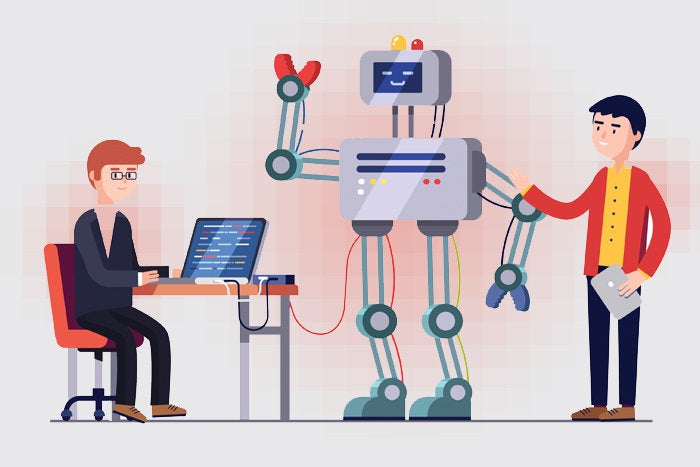
Probably the capability that best characterizes AI, machine learning is defined as the ability of an automated system to solve problems, adapt to new circumstances, and to detect and analyze novel patterns, without having to be programmed to do so.

Image source: infoworld.com


Natural language processing

An AI should have the ability to understand and communicate with people or other machines.  It then has the ability to learn how to process human language, which includes recognition and generation of such language.  It is not enough for the system to understand and act on pre-programmed commands, an AI’s natural language processing needs to evolve, much like that of a human’s.

Knowledge representation and reasoning

Humans create a “mental map” of what they perceive in the real world and the context behind them.  AI systems must also consist of knowledge representation and reasoning capabilities so that they can make sense of complex information, including queries or observations, infer new facts, and store these in their knowledge base.

Image source: techhive.com


AI is at the core of Welwaze Medical, Inc.’s development. The company develops external sensors that would allow users to monitor their health, for which they have raised approximately $11 million in funding. Alex J. Ness serves as the firm’s Executive Chairman. Read more about AI technology by subscribing to this blog.

Wednesday, June 20, 2018

How To Measure Roi On Technology Investments

Companies invest in technology – whether on new equipment or IT-related investments – with hopes of positive returns. But first, there’s a need to measure return on investment (ROI) as these investments gobble up time, money, and various resources in the organization. Here are some ways to measure properly and effectively.

Image source: Pixabay.com 


Simply put, ROI = net gain/cost. For instance, one spends $100 and makes $150. The net gain is $50. Following the equation, the ROI is 50 percent. In assigning the costs and benefits, many of the numbers will be guesses as well as approximations, and there will be alternate scenarios needing to be considered along the way. For example, if the staff saves time by 20 percent due to IT, how does that figure in the equation?

Costs can include money, time, disruption, as well as opportunity. Opportunity cost pertains to the missed chance of doing something else that might have made or saved money for the organization. It’s also important to add in the costs of training and support, as well as the proper disposal of the old technology.

The financial benefits of IT investments can fall into several buckets, including revenue enhancements, cost reductions, cost avoidance, capital reduction, and capital avoidance. Technology can definitely pave the way for new or more revenue streams along with a greater reach of the company’s services. Its tools can free up employee time and energy for more profitable, value-adding work, and improve overall quality services to clients.

Image source: Pixabay.com


Note that some ROI analysis may not fully capture these benefits, and thus need to tweak the equation for greater accuracy and comprehensiveness in results.

Alex J. Ness has years of experience in the areas of private banking, wealth management, and investment. He holds a degree in Business Administration, with focus on finance and management, and obtained his MBA at the American College of Switzerland, concentrating on International Business Management. More articles like this here.